
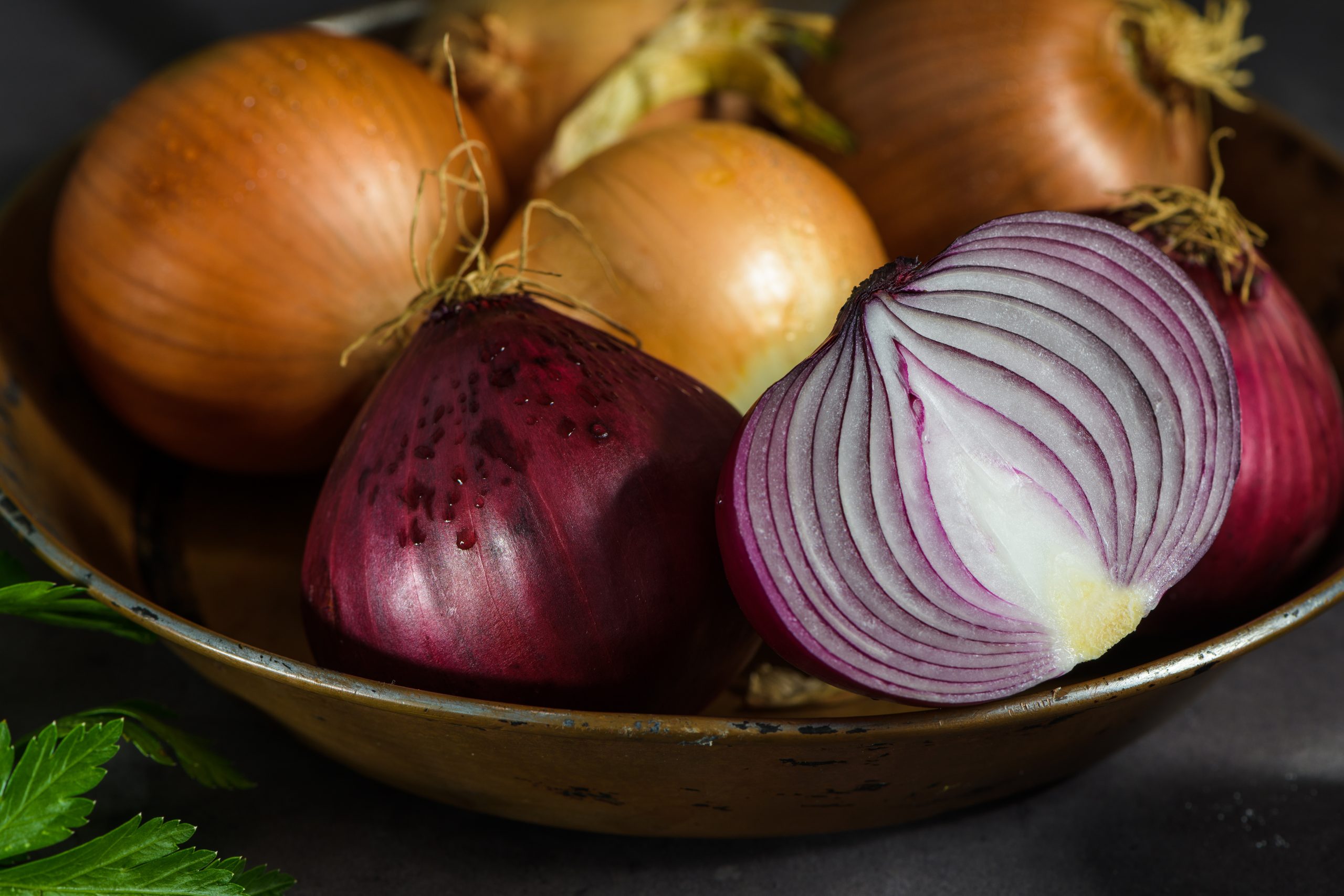
Quercetin, a natural antioxidant with immuno-modulatory properties, supports heart, kidney, immune, gastrointestinal, and skin functions. Although quercetin is available through dietary sources, its poor natural absorption compromises its health-promoting efficacy. A quercetin supplement can help improve health and wellness, but which one is the best option? Here are some factors to consider when searching for the most effective quercetin nutritional supplement.
The Most Effective Supplementation Methods
Various delivery routes have been explored to overcome quercetin’s natural absorption challenges. In contrast to natural quercetin found in dietary sources, supplement formulations can utilize an innovative delivery technology to enhance the active nutrient’s absorption, thus achieving greater efficacy of the nutrient’s health-promoting benefits.
| Quercetin Supplement Delivery Methods | |||
|---|---|---|---|
| Delivery Method | Advantage | Drawback | Type |
| Oral | Convenient and cost-effective — the most popular supplementation option. | Poor absorption due to extensive metabolism and excretion. | Tablets, capsules, and powders. Typical dosing of oral quercetin supplements are between 500 – 1,000 mg daily. |
| Topical | Easy-to-use for adverse skin conditions. | Low water-solubility and poor dermal penetration. | Liposomal formulations of lipid-based nanoparticles are delivered through ointments, gels, and sprays. |
| Intravenous (IV) | Bypasses transit through the stomach, which slows quercetin’s metabolism. | Expensive and requires medical supervision. | Injectable formulations of water-soluble quercetin are delivered through IV injections. |
Finding the Best Quercetin Supplement for Oral Intake
The key features of effective quercetin supplements are enhanced absorption and bioavailability of the active quercetin molecules. The following table highlights the features of high-quality quercetin supplements for oral intake:
| Choosing the Best Quercetin Supplement | |||
|---|---|---|---|
| Look for | Why This Helps | How to Tell | |
| Absorbability | The quercetin in the formulation is easily absorbed in a sustained-release format to increase efficacy. | The product label should indicate a form of quercetin that exhibits optimal absorption. | |
| Added nutrients | The formulation should contain synergistic nutrients that facilitate quercetin’s absorption. | The product label should indicate an encapsulated quercetin formulation. | |
| Innovative nutrient delivery | Innovative approaches, such as quercetin being contained in a cyclodextrin complex, optimize the solubility of quercetin and enable its targeted delivery. | The product label may mention specific nutrient delivery system. | |
Absorption Challenges of Quercetin
The following describes the fate of orally ingested quercetin as it passes through the gastrointestinal tract:
Initially, quercetin is primarily absorbed in the upper segment of the small intestine. Then, after being released into the blood and lymphatic circulation, quercetin metabolites reach the liver and enter the hepatocytes (liver cells). In the liver, they are further metabolized by Phase II conjugating enzymes in various organs, including the liver, small intestine, colon, and kidneys. The kidneys finally excrete the remaining quercetin and its metabolites into the urine.
The following table summarizes the key factors adversely affecting quercetin’s absorption in the body:
| Quercetin’s Absorption Challenges | ||
|---|---|---|
| Poor Aqueous Solubility | Quercetin has a poor water solubility – only 0.01 mg/ml. | |
| Instability in the stomach and intestines | Quercetin is only stable for 4.5 hours in a pH range of 6-8. The stomach’s pH range is between 1.0 to 2.5, and the intestinal pH range is between 6.0 and 7.5. | |
| Poor Permeability | Quercetin’s naturally large chemical structure hinders its ability to pass through cellular membranes. | |
| Rapid degradation | Quercetin will prematurely degrade during its transit through the stomach. | |
| Extensive First-Pass Metabolism in the Liver | Liver cells break down most quercetin metabolites, after which they are excreted into the urine by the kidneys. | |
Naturally occurring quercetin has very poor oral bioavailability (only around 2%)5. The oral intake of 100 mg of quercetin glucoside, the naturally occurring form of quercetin, displays a bioavailability range between 3 and 17 percent in healthy individuals6. Less absorption of quercetin means a lesser amount of quercetin circulating in the blood to exert its many health-promoting benefits.
Although quercetin has poor natural bioavailability, an innovative quercetin nutritional supplement formulation can significantly improve its absorption and efficacy. Encapsulation of quercetin molecules is a proven way to maintain their molecular integrity as they transit through the stomach. The subsequent targeted delivery of the quercetin molecules through nanotechnology delivery further enhances their absorption and bioavailability.
QuerciSorb® — A Novel Quercetin Supplement
Tesseract Medical Research’s Quercisorb SR® is an innovative quercetin supplement complex for sustained release of the active ingredients. In addition to quercetin, the formulation contains botanical extracts from the flower Sophora japonica, as well as vitamins and minerals.
Tesseract’s proprietary CyLoc® —DexKey® nutrient delivery nanotechnology enhances the solubility and absorption of quercetin, thereby enhancing the level being circulated in the blood where it can exert its many health-promoting benefits. Tesseract’s CyLoc® technology encases individual quercetin molecules in a dextrin fiber cage, which maintains their integrity during their transit through the stomach. The accompanying DexKey® reactors release quercetin molecules at the desired point in the intestinal tract for targeted delivery and unparalleled absorption.
| Why is QuerciSorb® the Best Quercetin Supplement? | ||
|---|---|---|
| It contains the proprietary Ionophoric-Quercetin complex developed for sustained release and optimal absorption of quercetin molecules. | ||
| It is a cyclodextrin-complex formulation that achieves targeted delivery and enhanced bioavailability of quercetin. | ||
| The formulation contains added nutrients, vitamin C, vitamin D3, and zinc, to achieve a more rapid physiological response. | ||
| QuerciSorb is manufactured following Good Manufacturing Practices (GMPs), including the most appropriate and scientifically-advanced analytical techniques, as well as a well-designed quality control system. | ||
Frequently Asked Questions About Oral Quercetin Supplements
Are there side effects to taking a quercetin supplement?
The safety profile of quercetin is well-established at one gram per day for short term use. Although adverse side effects of quercetin have rarely been reported, limited data are available on long-term quercetin use at levels of 1 gram daily and above for longer than 12 weeks.
Can I take a quercetin supplement with a prescription medicine?
Quercetin might have potential contraindications with certain prescription medications, such as blood thinners. Consult your health-care provider before including a quercetin supplement in your daily routine or taking a quercetin supplement with a prescription medicine. In general, it is always best to speak with your healthcare provider before starting a new supplement.
The power of Tesseract supplements lies in enhancing palatability, maximizing solubility, absorption and bioavailability, and micro-dosing multiple nutrients in a single, highly effective capsule. Shop products on our website and learn more about how they support your immune health.*
CitationsReferences:
1Leopold JA. Antioxidants . . . . Coronary artery disease vol. 26,2 (2015):176-183. doi:10.1097/MCA.0000000000000187
2Cammisotto V, et al. The role of antioxidants supplementation in clinical practice: Focus on cardiovascular risk factors. Antioxidants (Basel) 2021;10(2):146. doi:10.3390/antiox10020146
3Kedhari-Sundaram M, et al. Quercetin modulates signaling pathways . . . . Bioscience Reports vol. 39,8 BSR20190720. 13 Aug. 2019, doi:10.1042/BSR20190720
4Li C, et al. Quercetin inhibits LPS-induced adhesion molecule expression and oxidant production in human aortic endothelial cells by p38-mediated Nrf2 activation and antioxidant enzyme induction. Redox Biology vol 9 (2016):104-113. doi:10.1016/j.redox.2016.06.006
5Mirza MA, Mahmood S, Hilles AR, et al. Quercetin as a Therapeutic Product: Evaluation of Its Pharmacological Action and Clinical Applications-A Review. Pharmaceuticals (Basel). 2023;16(11):1631. Published 2023 Nov 20. doi:10.3390/ph16111631
6Graefe EU, Wittig J, Mueller S, et al. Pharmacokinetics and bioavailability of quercetin glycosides in humans. J Clin Pharmacol. 2001;41(5):492-499. doi:10.1177/00912700122010366

